
Alexander Litvinenko inquiry: How ex-spy was killed 'on Putin's orders' and why no-one is facing justice
An inquiry has found Mr Litvinenko was killed by polonium poisoning in 2006 after 'antagonising' the Russian president after fleeing Russia to become a British citizen
An inquiry has found the killing of former Russian spy Alexander Litvinenko was 'probably approved' by Russian President Vladimir Putin.
The pair had an 'antagonistic' relationship going back a number of years, which report author Sir Robert Owen found gave an "undoubtedly a personal dimension" to his killing.
Mr Litvinenko had fled Russia to become a British citizen and made "repeated highly personal attacks" on Putin, including an allegation of paedophilia in July 2006.
The 43-year-old died in November that year after meeting Andrei Lugovoi and Dmitri Kovtun in a London hotel, where it is believed he ingested radioactive polonium which was slipped into his tea.
Sir Robert concluded Lugovoi and Kovtun carried out the poisoning, probably under orders from President Putin.
Read more: Live updates as report into poisoning of Alexander Litvinenko is published
But despite the murder on British soil, it seems highly unlikely anyone will be brought to justice and the Kremlin have already stated the findings of the report are of 'no interest' to them.
Why would Russia have wanted Mr Litvinenko dead?
Mr Litvinenko was a fierce critic of both the Russian government and President Vladimir Putin .

Target: A video showed Russian forces using a picture Alexander Litvinenko as target practice
In 1999, he was jailed after claiming the FSB - the Federal Security Service of the Russian Federation - instructed him to kill high-profile billionaire Boris Berezovsky.
He fled to Britain upon his release in 2000 and continued to be outspoken against rulers in his native country.
The dissident made "repeated highly personal attacks" on the President after seeking asylum, including an allegation of paedophilia in 2006.

Allegations: Litvinenko accused Russian President Vladimir Putin of being a paedophile(Image: Getty)
He questioned why President Putin had kissed a boy on the chest underneath his T-shirt during a visit to the Kremlin in an article entitled 'Kremlin Paedophile'.
The report also noted Mr Litvinenko's determination to expose corruption in the FSB, "made him some dangerous enemies".
The FSB was also said to have found evidence the 43-year-old was working for the British intelligence agencies.

Poisoned: Russian spy Alexander Litvinenko in hospital(Image: Enterprise)
Sir Robert wrote: "I am satisfied that in general terms, members of the Putin administration, including the president himself and the FSB, had motives for taking action against Litvinenko, including killing him, in late 2006."
What evidence was found?
Suspected killers Dimitri Kovtun and Andrei Lugovoy travelled between Russia and London several times in the weeks before Mr Litvinenko's death.
On October 17, 2006, the trio met at security firm, RISC Management, in Cavendish Place, and went on to the Parkes Hotel in Knightsbridge.
Traces of Polonium 210 were later found at both locations.

Traces: The Emirates Stadium was one of a number of London venues visited by Lugovoy where radiation was found(Image: Adam Davy/PA Wire)
A week later Lugovoy returned to London on a British Airways plane and visited Mr Litvinenko at the Sheraton Park Lane hotel.
Again, traces of radiation were later found at both locations.
Tests later found Mr Litvinenko had ingested a small dose of polonium on a separate occasion in the weeks before his death.
Sir Robert wrote: "I am sure that Mr Litvinenko did receive an earlier, smaller, dose of polonium 210 prior to the fatal dose on 1 November 2006. The scientific evidence in this regard is compelling."

Scene: Levels of polonium found in the Pine Bar in London's Millennium Hotel(Image: MET Police)
The day before Mr Litvinenko was poisoned, Lugovoy watched Arsenal play CSKA Moscow in the UEFA Champions League at the Emirates Stadium in north London.
Traces of radiation were later found at the stadium.
On November 1, 2006, Kovtun arrived in London and the trio arranged to meet at the Millennium Hotel.
Kovtun and Lugovoy were waiting in the Pine Bar for Mr Litinenko when he arrived and a pot of tea was already on the table.
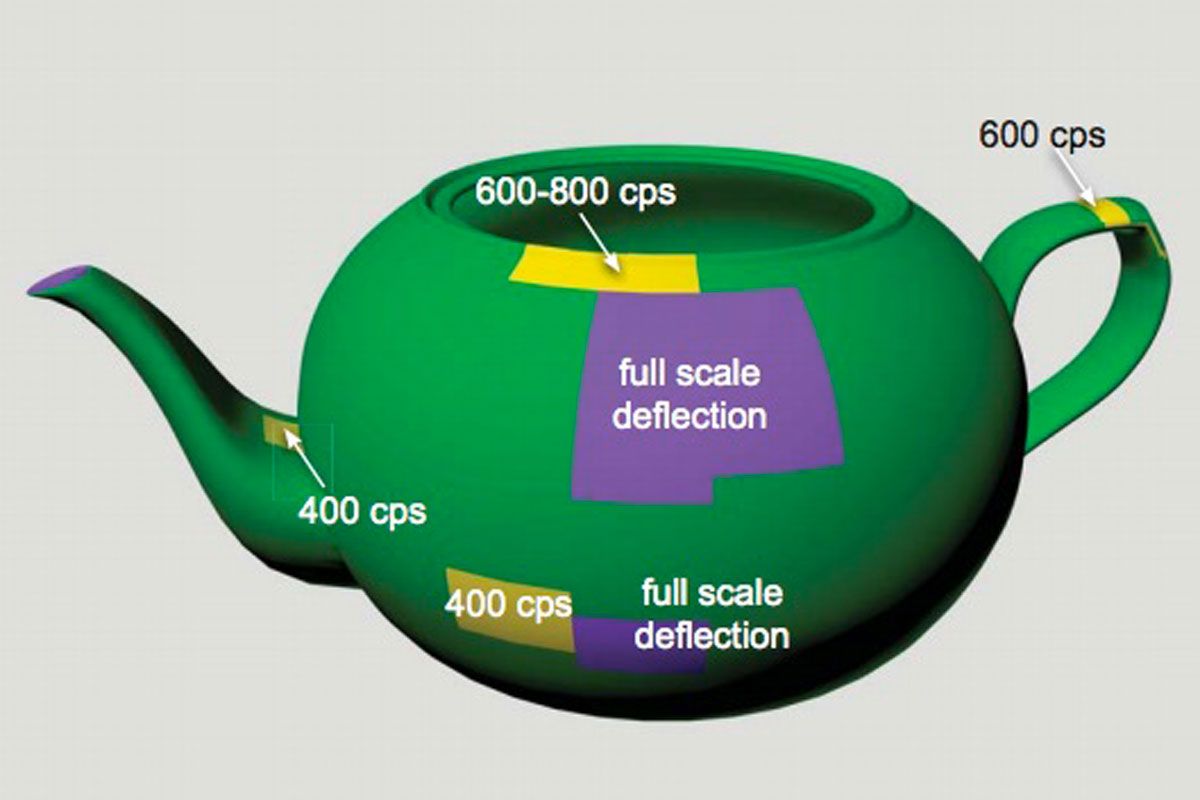
Laced: Forensic evidence of the polonium-laced tea pot(Image: MET Police)
Tests later found polonium had been poured out of the spout. The Pine Bar was also found to have extremely high readings for radiation.
Sir Robert writes: "This evidence all points to the conclusion that Mr Litvinenko ingested the fatal dose of polonium 210 whilst drinking tea in the Pine Bar of the Millennium Hotel during the afternoon of 1 November 2006, and I make a finding to that effect."
Why haven't Lugovoy and Kovtun faced a British court?
In 2007, the Director of Public Prosecutions ruled that police had sufficient evidence to charge Lugovoy with murder.
Britain made three requests to extradite him to the UK for questioning but each request was turned down by Russia.
The Russian government stated its constitution forbids extradition of its citizens to face trial abroad.

Suspect: Andrei K. Lugovoi has been accused of murder(Image: The New York Times)
Kovtun was later also charged and similar requests have been turned down by Russia.
European Arrest Warrants have also been put in place meaning the suspects can be arrested if they travel outside of Europe.
Sir Robert stated Russia has not co-operated with the police investigation and that Lugovoy has been celebrated in the country since the killing.
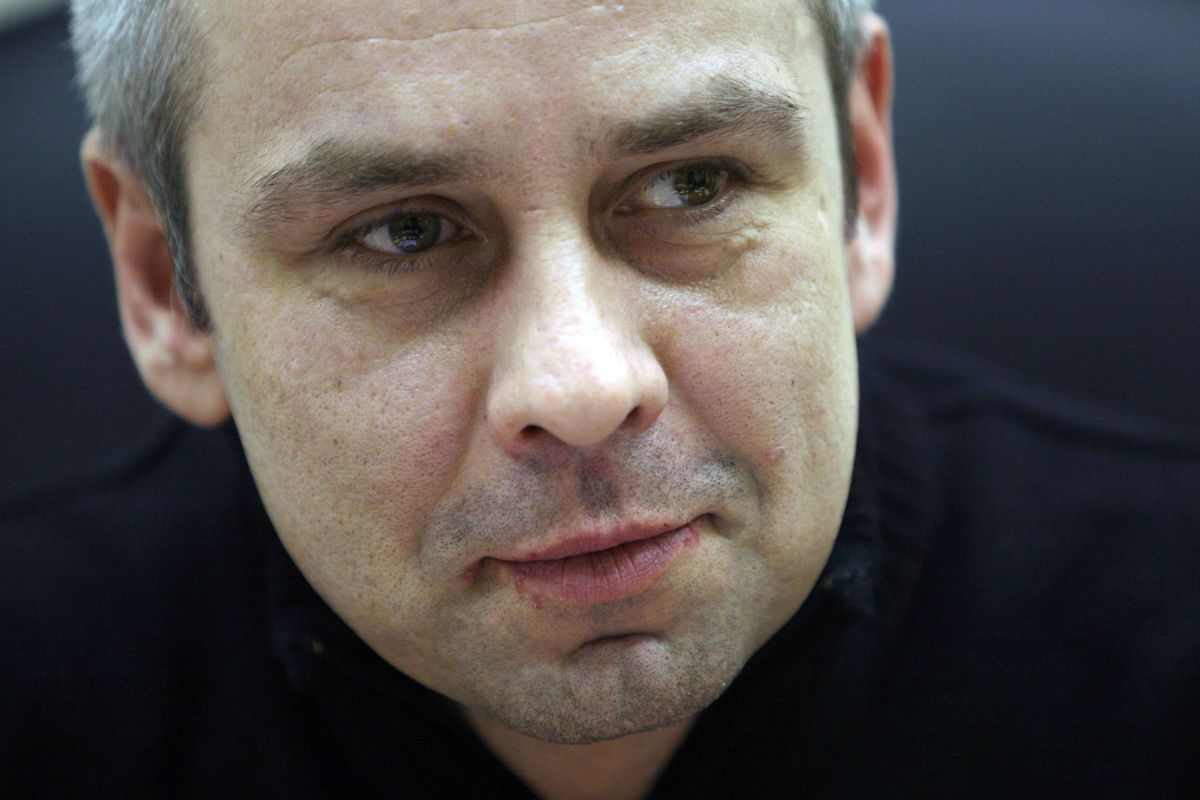
Suspect: Dmitri V. Kovtun is also believed to have killed Litvinenko(Image: The New York Times)
He said: "Mr Lugovoy has been lionised in Russia. He has become a member of the Duma, and indeed was awarded an honour by President Putin during the course of the Inquiry’s hearings."
His role as a Russian MP also means he enjoys immunity from prosecution in the country.
The Metropolitan Police also said it was met with "stupid, petty obstructions" when travelling to Moscow to question the pair - including failing to provide a tape of Lugovoy's interview.
Mr Horwell QC, who appeared on behalf of Scotland Yard, told the inquiry: “Why be obstructive if there was nothing to hide?
"The lack of full cooperation in Moscow with the interviews of Lugovoy and Kovtun: stupid, petty obstructions placed in the way of the police officers who went to interview them.
"The failure of the Russians to supply the tape of Lugovoy’s interview perhaps says it all. The motivation obvious.
"The Russians wanted control of those interviews, a control which was resurrected but a few days ago. Hardly a reaction indicative of an interest in truth and justice.”
Will the report's revelations change anything?
The findings of the report will renew calls for Lugovoy and Kovtun to be extradited to face trial in the UK.
Prime Minister David Cameron has described the finding of the report as "extremely disturbing" and added "it is not a way for any state to behave".
Home Secretary Theresa May then told the House of Commons the murder was 'a blatant breach of international law' and said the Government had agreed to put in asset freezes against the two suspects Lugovy and Kovtun.
She said: "This was a blatant and unacceptable breach of the most fundamental tenets of international law and civilised behaviour. But we have to accept that this doesn't come as a surprise.
“The government takes these findings extremely seriously as I am sure does every member of this House.
“The conclusion that the Russian state was probably involved in the murder of Mr Litvinenko is deeply disturbing."
But President Putin looks all but certain to reject any fresh extradition requests and is unlikely to directly address allegations he ordered the killing.
The Russian Foreign Ministry dismissed the outcome as biased and opaque, saying London's handling of the case had clouded ties between the countrues.
Maria Zakharova, a spokeswoman for the foreign ministry, said: "We regret that what was a purely criminal case was politicised and has clouded the general atmosphere of our bilateral ties.
"The process ... was not transparent for the Russian side or for society because of the way materials were examined behind closed doors under the pretext that they were secret."
She said the final outcome was therefore the result of a "politically-motivated and extremely opaque process."
So what happens now?
Mrs May said the Russian ambassador in London will be summoned to the Foreign Office, noting: "We will express our profound displeasure at Russia's failure to cooperate and provide satisfactory answers.
"Specifically we have and will continue to demand that Russian government account for the role of the FSB in this case."
But in reality, little can be done while Russia refuses to co-operate with the prosecution of the suspects.

Response: Andy Burnham called for the expulsion of all FSB officers from Britain(Image: PA)
Mrs May said the Government would "respond in due course" to a further recommendation contained in a section of the report which has not been made public, but gave no indication as to its nature.
Shadow home secretary Andy Burnham said the Government's diplomatic response did not "go anywhere near enough in answering the seriousness of the findings" and "could send a dangerous signal to Russia that our response is too weak".
He suggested the immediate expulsion of every FSB operative in the UK and strengthened economic sanctions.
Alexander Goldfarb, who was a friend of Mr Litvinenko, said: "I think the British Government should go to the security council and demand a resolution to censure Russia, to have Russia accept responsibility and pay compensation to the victims.
"I want the British Government to announce sanctions, particularly sanctions against the Russian atomic enterprises who willingly provided the murder weapon."
However, others believe Britain must tread carefully to preserve diplomatic ties.
Tony Brenton, who was British ambassador to Russia at the time of the killing, said that while the UK must react "strongly" to the murder, "tearing up" diplomatic relations with Russia was "not in Britain's interests".
"We have quite important other fish to fry with the Russians. They are very important in carrying the Iran de-nuclearisation through, they are absolutely crucial in sorting out the mess in Syria."

